1

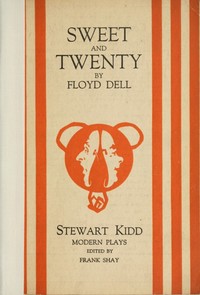
Sweet and Twenty: A Comedy in One Act — A Reader’s Guide
(0 User reviews)
2662
Project Gutenberg
2017
Not confirmed
Comedy plays; One-act plays; American drama -- 20th century
Readers of public-domain and historical texts
Project Gutenberg digital edition
en
Edition facts
Words
9,432
Reading time
42 min
Text sections
8
Before opening Sweet and Twenty: A Comedy in One Act — A Reader’s Guide, the edition data offers a quick orientation: 9,432 words, 42 min estimated reading time, and 8 detected text sections.
The text analysis averages about 13.1 words per sentence, while the detected sections provide another way to judge how the source is divided.
Project Gutenberg metadata also associates the work with “Comedy plays,” connecting these edition facts with the source record’s subject description.
Source:
Project Gutenberg record #54711
In Floyd Dell's one-act comedy, lovers George and Helen resist a matchmaking plot by their relatives, revealing deeper conflicts over dancing, municipal ownership, and the institution of marriage itself. A mysterious agent offers an unconventional solution.
Read the complete public-domain text at its original source.
Read on Project GutenbergFloyd Dell's Sweet and Twenty opens with a lovers' quarrel that is not about jealousy but about incompatible tastes: Helen insists the tango is outdated, while George refuses to entertain even a platonic affection for it. Their disagreement escalates into a standoff over municipal ownership versus dancing, a clash that the play treats as a serious incompatibility. The arrival of a mysterious agent, who has witnessed their embrace, shifts the conflict from personal preference to a philosophical debate about marriage itself. The agent, a self-described bachelor who has gone through the marriage ceremony many times, argues that marriage is an iniquitous arrangement that destroys love. The play's comedy emerges from the tension between the lovers' genuine affection and their determination to avoid the trap of matrimony, with the agent as an unlikely ally.
The Dance of Disagreement
The play's central conflict is introduced through a series of trivial yet emblematic disputes. Helen and George are in love, but they cannot agree on what constitutes a proper dance. Helen declares the tango passé; George retorts with the maxixe. This argument is not merely about steps—it represents a fundamental difference in how they approach life. The agent, observing, notes that a taste for dancing and a taste for municipal ownership stand at opposite ends of the earth. The play uses these specific, period-appropriate references to ground its comedy in the social tensions of the early twentieth century, where modern dances and progressive politics were both markers of identity. The lovers' inability to reconcile these preferences foreshadows the larger incompatibility they fear in marriage.
The Agent's Unorthodox Philosophy
The agent, who initially appears as a potential obstacle, becomes the lovers' most persuasive advocate against marriage. He describes marriage as a trap devised by the Devil, not because of a lack of love, but because of the institution itself. His argument is paradoxical: he has gone through the ceremony many times to please others, but he distinguishes that from what he calls real marriage. The agent's philosophy is illustrated through a surprising analogy—the picnic. He asks the lovers if they have ever gone on a picnic, invoking a primal instinct to gather around a fire and eat with one's fingers. This analogy suggests that marriage, like a picnic, is a return to savage ancestors, but one that is doomed by its own artificial structure. The agent's speech is both comic and unsettling, as he warns that the lovers will end up sick of each other in twenty years if he does not save them.
Resistance to Familial Pressure
The lovers' predicament is not of their own making. George's Aunt Maria and Helen's Uncle Tubby have conspired to send them to a ten-day house-party on Long Island, with the clear intention of forcing a marriage. George's reaction—'Then we're done for!'—and Helen's defiance—'I shan't do it!'—reveal the external pressure they face. The play contrasts the lovers' genuine affection with the coercive matchmaking of their relatives. Helen's outburst at the agent—'You old scoundrel!'—when he admits to having avoided marriage himself, shows her indignation at being manipulated. Yet the agent's response—that he has always gone through the ceremony to please them—highlights the social expectations that bind the characters. The comedy lies in the lovers' frantic search for a way out, even as they admit they are madly in love.
Readers should attend to the play's use of specific cultural references—dances, municipal ownership, house-parties—as markers of character and conflict. The agent's picnic analogy, though brief, encapsulates the play's skeptical view of marriage as a social institution. Dell's one-act structure allows for a tight focus on the central debate, with no subplots to distract from the lovers' dilemma. The ending, though not included in the excerpts, is likely to resolve the tension between love and autonomy in a manner consistent with the play's comic tone.
Reading Dell’s comedy, I kept thinking how the holidays often saddle us with the same old arguments about togetherness—what it means, who gets to define it. That bittersweet tension between expectation and belonging lingers in Yuletide entertainments — Themes and Context, where the festivity feels less like a solution and more like a question. Maybe we’re all a little homesick for answers that never quite arrive.
There are no reviews for this eBook.
There are no comments for this eBook.
Reader reflection
What did you think of this book?
Answer a few questions and save a private reflection on this device.
Your progress
0
/
10
2
How did the book work for you overall?
3
Would you recommend this book to another reader?
4
Did the language feel accessible?
5
Did the book meet your expectations?
6
Did it raise ideas you would like to talk about?
7
Did any part of the book feel personally relevant?
8
Did this book create an emotional response?
9
What did this book teach you most?
10