1

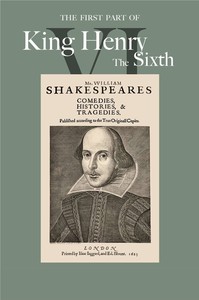
King Henry VI, Part 1 — Text and Context
(0 User reviews)
908
Project Gutenberg
1997
Not confirmed
Henry VI, King of England, 1421-1471 -- Drama; Great Britain -- Kings and rulers -- Drama; Historical drama; Great Britain -- History -- Henry VI, 1422-1461 -- Drama
Readers of public-domain and historical texts
Project Gutenberg digital edition
en
Edition facts
Words
25,969
Reading time
113 min
Text sections
3
Before opening King Henry VI, Part 1 — Text and Context, the edition data offers a quick orientation: 25,969 words, 1 hr 53 min estimated reading time, and 3 detected text sections.
The text analysis averages about 18.7 words per sentence, while the detected sections provide another way to judge how the source is divided.
Project Gutenberg metadata also associates the work with “Henry VI, King of England, 1421-1471 -- Drama,” connecting these edition facts with the source record’s subject description.
Source:
Project Gutenberg record #1100
An editorial note on Shakespeare's King Henry VI, Part 1, focusing on how the opening, middle, and later excerpts guide a first reading. Observations on the play's structure, Joan's persuasive rhetoric, and the use of stage directions are drawn from the provided text.
Read the complete public-domain text at its original source.
Read on Project GutenbergThe play opens not with a scene but with a paratextual note from the Project Gutenberg Executive Director, explaining the preservation of original spelling and typographical errors from the First Folio. This framing immediately alerts the reader to the text's historical texture: words like “liue” for “live” and “vnnaturall” for “unnatural” are retained, reflecting early modern printing practices. The first dramatic excerpt presents a scene where Joan of Arc (Pucell) persuades the Duke of Burgundy to defect from the English. Her speech is structured as a series of rhetorical appeals—visual, emotional, and logical—that culminate in Burgundy's surrender: “I am vanquished.” This moment establishes a pattern of persuasion through language that recurs throughout the play.
The Paratextual Frame and Its Implications
The editorial note preceding the play is unusual: it explains that the text follows the First Folio, with intentional preservation of period spellings and typographical “errors.” For a first-time reader, this means encountering words like “humane” for “human” and “Pucell” for Joan of Arc. The note also mentions that the volunteer scanner unified spellings according to a dictionary derived from the Geneva Bible and Shakespeare's First Folio. This transparency about textual intervention invites the reader to consider the play as a document with a material history, not just a literary work. The opening thus sets a scholarly tone, reminding us that the words on the page are mediated by editors and scanners.
Joan's Rhetoric: Persuasion as Action
In the excerpt, Joan of Arc employs a multi-layered persuasive strategy. She begins with an appeal to Burgundy's patriotism: “Looke on thy Country, look on fertile France, / And see the Cities and the Townes defac't.” She then shifts to a maternal metaphor, comparing France to a mother grieving over a dying child. The emotional crescendo is followed by a logical argument: the English, she claims, will betray Burgundy, citing the release of the Duke of Orleans without ransom as proof. Burgundy's response—comparing her words to “roaring Cannon-shot”—underscores the power of language as a weapon. This scene exemplifies how the play dramatizes political maneuvering through speech acts rather than physical combat.
Stage Directions and Theatricality
The excerpt includes embedded stage directions: “Drumme sounds a farre off,” “Here sound an English March,” “French March,” and “Trumpets sound a Parley.” These cues indicate that the play was designed for performance, with sound effects marking the presence of armies and shifts in allegiance. The juxtaposition of English and French marches visually and aurally represents the conflict. Additionally, the stage direction “Summon a Parley, we will talke with him” highlights the importance of verbal negotiation over direct violence. For a reader, these directions serve as reminders of the play's theatrical origins, encouraging visualization of movement and sound.
Characterization Through Verse and Prose
The excerpt reveals character through verse form and diction. Joan speaks in fluent iambic pentameter, using rhetorical devices like anaphora (“See, see the pining Maladie of France”) and apostrophe (“Oh turne thy edged Sword another way”). Burgundy's lines are shorter and more reactive, culminating in a prose-like admission of defeat: “I am vanquished.” The contrast between Joan's controlled, persuasive verse and Burgundy's fragmented responses underscores her dominance in the exchange. This pattern—where characters who wield language effectively gain power—is a key feature of the play's dramatic structure.
Reading the play with attention to its rhetorical strategies and stage directions enriches the experience. The excerpts suggest that King Henry VI, Part 1 is as much about the power of words as about military conflict. First-time readers may benefit from noting how characters use language to persuade, deceive, or command, and how the text's historical spelling invites reflection on its transmission from the First Folio to the digital edition.
I finished that King Henry VI, Part 1 guide with a strange quietness, the way Joan’s words stick long after the scene ends. It made me think of The Inca of Perusalem: An Almost Historical Comedietta — A Reader’s Guide, where history bends just as gently into something oddly tender and human. Some readings simply settle, without asking for anything more.
There are no reviews for this eBook.
There are no comments for this eBook.
Reader reflection
What was your reading experience?
Capture what you thought, learned, and would like to remember.
Your progress
0
/
10
2
What was your overall reaction to the book?
3
Is this a title you would suggest to others?
4
How demanding did the text feel?
5
How did the pace of the book feel?
6
How distinctive were its ideas or approach?
7
Would you start a conversation about this book?
8
How valuable was this book for your own interests?
9
What changed or sharpened your thinking?
10