1

Kabuki — Context and Discussion
(0 User reviews)
895
Project Gutenberg
2023
Not confirmed
Theater -- Japan; Japanese drama -- History and criticism; Kabuki
Readers of public-domain and historical texts
Project Gutenberg digital edition
en
Edition facts
Words
127,259
Reading time
554 min
Text sections
39
Kabuki — Context and Discussion can be approached with a clearer sense of reading commitment from its source measurements: 127,259 words, 9 hr 14 min estimated reading time, and 39 detected text sections.
The text analysis averages about 25.9 words per sentence, while the detected sections provide another way to judge how the source is divided.
Project Gutenberg metadata also associates the work with “Theater -- Japan,” connecting these edition facts with the source record’s subject description.
Source:
Project Gutenberg record #70471
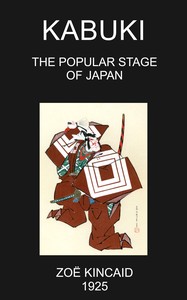
Zoë Kincaid's 1925 study traces Kabuki's evolution from O-Kuni's dances through the samisen's introduction and the Kineya family's musical legacy, drawing on twelve years of Tokyo theatre attendance and Japanese scholarship.
Read the complete public-domain text at its original source.
Read on Project GutenbergZoë Kincaid opens her study by acknowledging the Japanese scholars and theatre professionals who made her work possible, particularly Mr. Seiseiin Ihara, whose histories of the popular stage she calls indispensable. This network of informants—translators, critics, managers, and fellow theatre-goers—shapes the book’s authority. Kincaid writes from twelve years of sitting “among the critics of the Tokyo stage,” a position that gives her account a distinctive blend of archival research and direct observation. The excerpts show she is less concerned with plot summaries than with tracing how performance traditions, musical forms, and actor lineages developed over centuries.
From O-Kuni to the Samisen
The earliest excerpts describe Kabuki’s origins in the dances of O-Kuni, a shrine maiden, and the subsequent rise of minstrels who “beat their rhythms on the same metal gong” used for religious propaganda. Kincaid emphasizes the role of the samisen in transforming these performances. She explains that the new instrument enabled a style called Joruri, named after a ballad about Princess Joruri, and that this music culminated in the work of Takemoto Gidayu. His doll-theatre in Osaka, the Takemoto-za, became the site where Chikamatsu Monzaemon wrote plays for marionettes. Kincaid notes that Gidayu’s balladry “had an overwhelming influence upon Kabuki,” establishing a key link between puppet theatre and the live actor tradition.
The Kineya Dynasty and Nagauta
A substantial portion of the excerpts traces the Kineya family, whose name means “rice pounder” and derives from their crest. Kincaid details how Kineya Kisaburo first brought the samisen into Yedo Kabuki, and how the family’s music evolved into Nagauta, or “long poem,” which became the accompaniment for the music-posture dramas called shosagoto. She notes that this style, originating in Yedo, drew technique from Nō and that the Kineya house possesses some two hundred compositions. The genealogy is “extremely complicated,” with headship passing to the best pupil when no blood relation existed. The present Kineya Rokuzaemon, a young man in his twenties, is the fourteenth in descent, illustrating how Kincaid brings the historical narrative up to her own time.
Branches and Contemporary Musicians
Kincaid identifies several offshoots of the main Kineya line, such as Yoshizumi, Fujita, and Yoshimura, which emerged over a hundred years ago. She describes the current state of these companies: Yoshizumi Kosaburo, a ronin among musicians, performs only in small halls; Yoshimura Ejuro and Fujita Utazo are the most popular singers at the Imperial and Kabuki-za theatres respectively. These details ground the book in specific, observable facts about the 1920s Tokyo theatre scene. The excerpts do not reveal whether Kincaid offers critical judgments of these performers, but she clearly values precise information about who played where and under what circumstances.
Reading the Evidence of Collaboration
The excerpts show that Kincaid’s method relies heavily on acknowledging her sources—both Japanese scholars and theatre practitioners. She thanks Mr. Ihara for his “painstaking researches into drama” and for smoothing over misunderstandings at the theatre. This transparency about her collaborative process is itself a feature of the book. Readers should note that the narrative is built from translated documents, actor genealogies, and personal attendance, not from fictional invention. When Kincaid describes the Kineya family’s two hundred compositions or the genealogy’s complexity, she is condensing specialized knowledge for a Western audience. The book’s value lies in this synthesis of Japanese theatre history with an outsider’s perspective.
Because the excerpts focus on the early development of Kabuki music and the Kineya family, readers should expect the full book to cover other topics—such as acting styles, famous plays, and theatre architecture—with similar attention to lineage and detail. Kincaid’s reliance on Japanese-language sources and her twelve years of attendance make this a document of cross-cultural research as much as a history. Approach it as a work of scholarly synthesis, not a narrative history, and watch for the names of actors, musicians, and scholars that anchor each chapter.
Reading about Kineya's samisen weaving through Kabuki's history, I kept thinking how performance roots itself in generations of listening. There's a quiet ache in tracing that lineage, like watching old photographs. The Greek theater and its drama — Context and Discussion carries a similar weight—distant voices, still warm. Some books leave a faint imprint, and this one stays close, like a familiar melody half-remembered after the theatre empties.
There are no reviews for this eBook.
There are no comments for this eBook.
Reader reflection
How did this book work for you?
Your answers remain private and are stored only in this browser.
Your progress
0
/
10
2
How much did you enjoy the reading experience?
3
How likely are you to recommend this book?
4
How demanding did the text feel?
5
Did the story or argument move comfortably?
6
Would a second reading be valuable?
7
Did you relate to its people, ideas, or situations?
8
How clear did the writing feel?
9
What changed or sharpened your thinking?
10