1

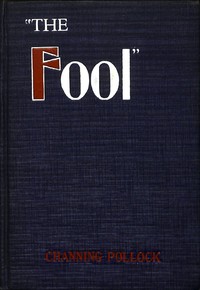
The Fool: A Play in Four Acts — Text and Context
(0 User reviews)
384
Project Gutenberg
2015
Not confirmed
American drama -- 20th century; Clergy -- Drama; Strikes and lockouts -- New York (State) -- New York -- History -- 20th century -- Drama; Christian life -- Drama; New York (N.Y.) -- Social life and customs -- Drama
Readers of public-domain and historical texts
Project Gutenberg digital edition
en
Edition facts
Words
27,797
Reading time
121 min
Text sections
7
The source record for The Fool: A Play in Four Acts — Text and Context measures this digital text at 27,797 words, 2 hr 1 min estimated reading time, and 7 detected text sections.
The text analysis averages about 9.3 words per sentence, while the detected sections provide another way to judge how the source is divided.
Project Gutenberg metadata also associates the work with “American drama -- 20th century,” connecting these edition facts with the source record’s subject description.
Source:
Project Gutenberg record #49181
Channing Pollock's 1922 play traces a clergyman's radical Christianity through four acts set in New York, from a Christmas Eve church to a strike settlement gone wrong. The excerpts reveal a drama built on confrontational dialogue, economic argument, and a protagonist whose literal faith unsettles both wealthy parishioners and labor leaders.
Read the complete public-domain text at its original source.
Read on Project GutenbergPollock's play opens on Christmas Eve 1918 in the Church of the Nativity, where the stage directions emphasize shadows and an unlit altar—a visual cue that the faith proclaimed inside may be hollow. The first act introduces a clergyman whose literal interpretation of Christian teachings immediately clashes with the congregation's comfortable piety. By Act II, set a year later in the Goodkind home, the conflict has shifted to economic grounds: Daniel Gilchrist, the minister, has been mediating a strike, and his settlement terms prove unexpectedly radical. The dialogue between Gilchrist and the industrialist Goodkind reveals the play's central tension—whether charity can coexist with capitalism—through sharp, Socratic exchanges rather than sermonizing.
A Stage Built on Argument
The excerpts show Pollock favoring debate over action. In Act II, Gilchrist and Goodkind spar over labor, wages, and incentive in a scene that reads like a philosophical dialogue. Goodkind asserts that “the minute the average man isn't afraid of being fired he isn't afraid of being worthless,” while Gilchrist counters with quiet agreement that subtly undermines each point. The play's structure relies on these verbal confrontations: the strike settlement, never shown on stage, becomes a catalyst for ideological showdowns. Readers should watch how Pollock uses repetition—Gilchrist's repeated “Thanks” and “Right”—to signal a character who listens more than he preaches, making his eventual radicalism more startling.
The Fool's Crown of Thorns
The epigraph—“They called me in the public squares / The fool that wears a crown of thorns”—frames the protagonist as a Christ-like figure misunderstood by society. The excerpts do not reveal whether Gilchrist embraces or rejects this role, but the title and the opening stage picture of an unlit altar suggest a critique of institutional Christianity. The play's four acts span two years, from Christmas Eve 1918 to Christmas Eve 1920, a temporal structure that invites comparison between the birth of Christ and the rebirth (or failure) of Gilchrist's mission. Readers should note how the seasonal setting recurs: the first and fourth acts both occur on Christmas Eve, creating a potential arc from expectation to judgment.
Wealth and Its Discontents
The Goodkind household in Act II is a world of cigars, humidors, and easy chairs—props that signal comfort and control. Goodkind's language is pragmatic: he speaks of “incentive,” “standard,” and “social structure” as if they were mechanical parts. Gilchrist, by contrast, introduces terms like “contented” and “interest in his job,” words that Goodkind dismisses as naive. The excerpts do not show the strike's resolution, but the tension between these two vocabularies—one of efficiency, one of humanity—drives the play. Pollock wrote during the Red Scare and labor unrest of the early 1920s; the play's engagement with these issues is direct, not allegorical. Readers should attend to how the setting shifts from church to home to “Overcoat Hall” (Act III) and finally to Gilchrist's room “Upstairs” (Act IV), each space reflecting a different social sphere.
Reading the Silences
The excerpts contain several notable gaps. The strike terms that Gilchrist presents are never fully quoted; we see only Goodkind's reaction—“What's this?”—and Benfield's presence. The play's climax and Gilchrist's fate remain unknown from these pages. Pollock also withholds the content of Gilchrist's sermons: we hear him debate economics, not theology. This suggests that the play's drama lies in the consequences of belief rather than its exposition. Readers should approach the text as a series of confrontations where what is unsaid—the contents of the document, the nature of Gilchrist's faith, the reaction of the congregation—matters as much as the dialogue. The stage directions, with their emphasis on lighting and shadows, reinforce this sense of partial revelation.
Pollock's play rewards attention to its verbal sparring and spatial symbolism. The four-act structure moves from sacred to domestic to public to private spaces, each setting testing Gilchrist's principles against a different form of worldly power. Readers who track the recurring motifs—the unlit candles, the Christmas tree, the word “fool”—will find a drama that uses its theatrical form to question whether radical Christianity can survive in a society built on self-interest. The excerpts offer a map of these conflicts without revealing their resolution.
Reading Pollock’s clergyman, so earnestly colliding with the city’s hard surfaces, I kept thinking of masks—the roles we all wear, and what slips through their seams. There’s something almost playful in that solemnity, a shadow-play of belief and doubt. It brought back an old quiet curiosity about Marionettes, masks and shadows — Key Ideas to Explore, and how even the stiffest strings can tremble with life.
There are no reviews for this eBook.
There are no comments for this eBook.
Reader reflection
How did this book work for you?
Your answers remain private and are stored only in this browser.
Your progress
0
/
10
2
Did this book hold your interest?
3
Would you recommend this book to another reader?
4
How much effort did this book require?
5
How clear did the writing feel?
6
What was the strongest part of the book?
7
Did it raise ideas you would like to talk about?
8
Was the book what you thought it would be?
9
In one sentence, what did you learn?
10