1

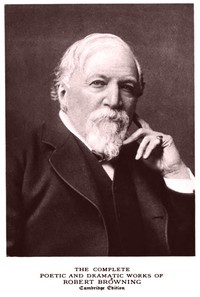
The Complete Poetic and Dramatic Works of Robert Browning Cambridge Edition — Story, Setting & Ideas
(0 User reviews)
447
Project Gutenberg
2016
Not confirmed
Browning, Robert, 1812-1889; English poetry -- 19th century; English drama -- 19th century
Readers of public-domain and historical texts
Project Gutenberg digital edition
en
Edition facts
Words
857,390
Reading time
3728 min
Text sections
159
This digital edition of The Complete Poetic and Dramatic Works of Robert Browning Cambridge Edition — Story, Setting & Ideas is described by source-level measurements including 857,390 words, 62 hr 8 min estimated reading time, and 159 detected text sections.
The text analysis averages about 20.5 words per sentence, while the detected sections provide another way to judge how the source is divided.
Project Gutenberg metadata also associates the work with “Browning, Robert, 1812-1889,” connecting these edition facts with the source record’s subject description.
Source:
Project Gutenberg record #50954
This editorial note examines how Browning's opening, middle, and later excerpts guide a first reading of his complete works, focusing on the dramatic monologue's evolution from 'Pauline' to 'The Ring and the Book'.
Read the complete public-domain text at its original source.
Read on Project GutenbergRobert Browning's complete poetic and dramatic works, as gathered in the Cambridge Edition, span over 850,000 words and 159 text sections. The opening excerpt from 'Pauline: A Fragment of a Confession' introduces a speaker in a state of intense self-examination, with lines like 'I am made up of an intensest life' setting a tone of psychological urgency. This early work, published in 1833, already displays Browning's characteristic interest in the confessional mode and the struggle to articulate inner experience.
The Confessional Opening
The volume begins with 'Pauline', a poem that plunges the reader into a fragmented, first-person confession. The speaker's language is dense with introspection: 'I am made up of an intensest life' and 'I am a wanderer: I remember well / One journey'. The syntax is often convoluted, mirroring the speaker's turbulent mental state. This opening establishes a pattern that recurs throughout Browning's work: the reader is placed inside a consciousness, forced to piece together meaning from emotional and sensory fragments. The poem's subtitle, 'A Fragment of a Confession', signals that the narrative is incomplete, a technique Browning would refine in later dramatic monologues.
The Middle Excerpt: Dramatic Tension
A later excerpt from 'The Ring and the Book' showcases Browning's mature dramatic monologue. The speaker, Caponsacchi, recounts the flight with Pompilia in a breathless, vivid narrative. Phrases like 'the ecstatic minute must bring birth' and 'the white I saw shine through her was her soul's' reveal Browning's ability to blend physical detail with spiritual intensity. The passage is structured around a series of rapid, sensory impressions—'a tune in the ears', 'a light in the eyes'—that build toward the climactic appearance of Pompilia. The speaker's voice is urgent and defensive, as he insists on the truth of his account: 'Each incident / Proves, I maintain, that action of the flight / For the true thing it was.' This excerpt demonstrates Browning's mastery of the dramatic monologue form, where the speaker's rhetoric reveals as much about his own character as about the events he describes.
The Later Excerpt: Reflection and Defense
In the later portion of 'The Ring and the Book', Caponsacchi's monologue becomes more reflective and defensive. He addresses his listeners directly—'Sirs, how should I lie quiet in my grave / Unless you suffer me wring, drop by drop, / My brain dry'—a plea that underscores the psychological stakes of the narrative. The imagery shifts from external action to internal memory: 'a riddance of the drench / Of minutes with a memory in each'. Browning uses the metaphor of a 'glass' to suggest the transparency of Pompilia's soul, yet the speaker's own language is anything but transparent; it is dense with metaphor and emotional charge. This section illustrates how Browning's later work combines high drama with philosophical meditation on truth, memory, and justice.
Chronological Structure and Editorial Apparatus
The Cambridge Edition arranges Browning's works chronologically, with brief headnotes and explanatory notes. The editor, Horace E. Scudder, draws on George Willis Cooke's 'Guide-Book' for commentary. This structure allows readers to trace Browning's development from the early, introspective 'Pauline' to the complex dramatic monologues of 'The Ring and the Book'. The volume also includes a biographical sketch, a chronological list of writings, and indexes of titles and first lines. For a first reading, the chronological order is instructive: one can observe how Browning's voice evolves from the lyrical intensity of his youth to the dramatic sophistication of his later works. The headnotes provide context without overwhelming the text, making this edition suitable for both new readers and scholars.
Reading Browning's complete works in this edition offers a unique opportunity to witness the development of a major poetic voice. The excerpts from 'Pauline' and 'The Ring and the Book' highlight his enduring fascination with the limits of self-expression and the power of dramatic speech. New readers may find it helpful to start with the later, more accessible monologues before returning to the early poems, but the chronological arrangement rewards those who follow the poet's own trajectory.
Returning to Browning's early drafts, I kept noticing how his characters strain toward fairness, even when their hearts pull elsewhere. It put me in mind of Inkle and Yarico: An opera, in three acts — Background and Themes, where that same tug-of-war between self-interest and empathy unfolds so tenderly. Both works feel like conversations with oneself, never quite resolved.
There are no reviews for this eBook.
There are no comments for this eBook.
Reader reflection
Your personal reading reflection
Build a private reading journal entry for this title.
Your progress
0
/
10
2
Did this book hold your interest?
3
Is this a title you would suggest to others?
4
How easy was the book to follow?
5
Is this a title worth rereading?
6
What was its emotional impact?
7
How useful did the reading feel?
8
What did you think about the pace?
9
What did this book teach you most?
10