1

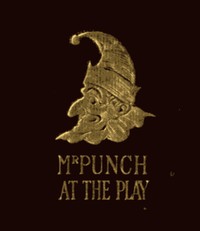
Mr. Punch at the Play: Humours of Music and the Drama — Story, Setting & Ideas
(0 User reviews)
39
Project Gutenberg
2011
Not confirmed
English wit and humor; English wit and humor, Pictorial; Theater -- Great Britain -- Humor
Readers of public-domain and historical texts
Project Gutenberg digital edition
en
Edition facts
Words
15,317
Reading time
67 min
Text sections
5
The source record for Mr. Punch at the Play: Humours of Music and the Drama — Story, Setting & Ideas measures this digital text at 15,317 words, 1 hr 7 min estimated reading time, and 5 detected text sections.
The text analysis averages about 11.7 words per sentence, while the detected sections provide another way to judge how the source is divided.
Project Gutenberg metadata also associates the work with “English wit and humor,” connecting these edition facts with the source record’s subject description.
Source:
Project Gutenberg record #36529
A collection of Punch magazine's theatrical humor, featuring 140 illustrations by Charles Keene and others, satirizing actors, playwrights, and audiences through puns, one-liners, and comic sketches.
Read the complete public-domain text at its original source.
Read on Project GutenbergThe volume opens with a gallery of theatrical types, from the actor whose mind is made up to the voice from the gallery retorting about his face. This interplay between stage and audience recurs throughout, as Punch's artists and writers skewer the conventions of Victorian theatre. The editor, J. A. Hammerton, has selected pieces that highlight the gap between performance and reality, often through a single punchline or a brief exchange. Charles Keene's illustrations, alongside those of Du Maurier, Phil May, and others, capture the physical comedy of exaggerated gestures and misplaced dignity. The book's structure moves between genres—melodrama, problem plays, music halls—and settings, from the stalls to the gallery, creating a mosaic of theatrical life.
The Audience as Performer
Many sketches turn the audience into the real show. A fair matron recalls an actor's performance years ago, only to be told that the role brought him more compliments than anything else. The actor's vanity is mirrored by the spectator's self-importance. In another piece, a playgoer leaves after scanning the stalls and boxes because he saw no one he knew—the social scene matters more than the drama. The gallery's voice is a recurring motif: a shout from above deflates the actor's grandiosity. These moments suggest that the theatre is a space where everyone performs, not just those on stage.
Puns and Wordplay as Critical Tools
The humor often relies on linguistic twists. A manager's autograph-filled house is dubbed the 'ordertorium'; the 'waits' between acts become Christmas music for theatres. A 'walking lady' is late for rehearsal, and the stage manager icily remarks that incompetence is a gift from heaven. The puns are not mere jokes but critiques: 'What we want for the British drama generally is not so much native talent as imagi-native talent.' This wordplay extends to definitions: a 'band-box' is an orchestra, a 'private box' a sentry box. The cumulative effect is a lexicon of theatrical absurdity, where language itself becomes a source of satire.
The Mechanics of Melodrama
Melodrama's excesses are a frequent target. In one sketch, a peep-showman explains signal lights to a small boy, only to discover the show is on fire—a literal 'startling effect.' Another piece mocks the provincial drama: the Marquis asks if he hasn't given his heir the education of a gentleman, and the reply is a flat 'You 'ave!!' The humor lies in the gap between high-flown dialogue and mundane reality. The book also satirizes the fashion for French dramas, with audiences pretending to understand, and the 'original plays' that are merely translations. These jabs reveal a suspicion of theatrical artifice, preferring the blunt honesty of the gallery's voice.
The Artist's Eye: Charles Keene and His Contemporaries
The illustrations are integral to the humor. Charles Keene's line drawings capture the stiffness of amateur actors and the boredom of the audience. Du Maurier's contributions often focus on the social pretensions of theatre-goers. The book's format—a page of text facing a full-page illustration—creates a rhythm of setup and payoff. In one image, a crowded house is shown from the back, with a voice demanding 'Ears off in front there, please!' The visual gag reinforces the verbal one. The variety of artists ensures a range of styles, from Phil May's loose sketches to Bernard Partridge's more detailed caricatures, each bringing a different facet of theatrical life into focus.
This collection does not attempt a comprehensive history of Victorian theatre, but rather offers a series of snapshots from the auditorium and the wings. Readers interested in the period's performance culture will find the illustrations as revealing as the text. The humor is often cruel, but it is also affectionate: Punch's mockery stems from a deep familiarity with the stage. To read this book is to eavesdrop on a century of theatrical gossip, where every quip and caricature adds to a portrait of a world that took itself both very seriously and not at all.
There’s something about old theater jokes that lingers—the way Mr. Punch at the Play captures actors mid-gesture, audiences half-laughing, all those tiny human vanities. It reminded me of sitting with The Imaginary Invalid — Inside the Classic afterwards, not because the humor is loud, but because both quietly understand how we perform sickness, pride, and attention for one another. I kept turning pages just to feel that recognition again.
There are no reviews for this eBook.
There are no comments for this eBook.
Reader reflection
How will you remember this book?
Save your reaction, strongest insight, and memorable passage.
Your progress
0
/
10
2
Did this book hold your interest?
3
Would you recommend this book to another reader?
4
What was the reading difficulty like?
5
Did the book meet your expectations?
6
Could you apply anything you learned?
7
How much did the book move you?
8
How personally connected did you feel to the book?
9
Which lesson or insight stayed with you?
10