1

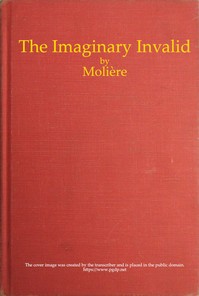
The Imaginary Invalid — Inside the Classic
(0 User reviews)
2917
Project Gutenberg
2005
Not confirmed
Comedy plays; Hypochondria -- Drama; Molière, 1622-1673 -- Translations into English
Readers of public-domain and historical texts
Project Gutenberg digital edition
en
Edition facts
Words
25,246
Reading time
110 min
Text sections
7
The source record for The Imaginary Invalid — Inside the Classic measures this digital text at 25,246 words, 1 hr 50 min estimated reading time, and 7 detected text sections.
The text analysis averages about 15.1 words per sentence, while the detected sections provide another way to judge how the source is divided.
Project Gutenberg metadata also associates the work with “Comedy plays,” connecting these edition facts with the source record’s subject description.
Source:
Project Gutenberg record #9070
Molière's final play satirizes hypochondria through Argan's obsessive tallying of apothecary bills and his family's schemes. The structure alternates between Argan's self-absorbed monologues and rapid comic scenes, with recurring imagery of clysters, purges, and medical jargon. The translation by Charles Heron Wall preserves the farcical rhythm.
Read the complete public-domain text at its original source.
Read on Project GutenbergThe play opens with Argan seated at a table, methodically counting apothecary bills with counters, reciting sums aloud: “Three and two make five, and five make ten, and ten make twenty.” This arithmetic ritual immediately establishes his hypochondria as both a financial and bodily obsession. The bills itemize clysters, juleps, and purgatives with clinical precision, yet Argan haggles over each charge, revealing a contradictory blend of credulity and suspicion. Molière structures the scene as a solo performance, letting Argan’s voice dominate before any other character appears.
Arithmetic of Illness
Argan’s opening monologue is a ledger of symptoms and costs. He recites each treatment—a “small, insinuative clyster, preparative and gentle”—and then disputes the price, converting thirty sous to twenty, then ten. This numerical obsession recurs throughout: he counts, deducts, and recalculates, treating his body as a balance sheet. The apothecary’s bills become a running joke, with Argan’s arithmetic both precise and self-serving. Molière uses this device to expose the economic underpinnings of medical care, where health is quantified in sous and deniers.
The Doctor’s Vocabulary
Medical jargon saturates the dialogue, from “detergent clyster” to “hepatic, soporiferous, and somniferous julep.” Characters like Mr. Purgon and Mr. Fleurant speak in elaborate prescriptions, while Béralde counters with plain reason: “Nature, when we leave her free, will herself gently recover.” The contrast between ornate medical language and blunt skepticism drives the comedy. Molière does not mock doctors alone; he targets the shared belief in jargon as authority. Argan himself parrots the terms, revealing how language can become a substitute for genuine understanding.
Movement Between Scenes
The play shifts rapidly from Argan’s solitary accounting to family confrontations, then to medical consultations. Each scene pivots on a new character’s entrance: Toinette the maid, Béralde the brother, or the Diafoirus father and son. These transitions create a rhythm of interruption, with Argan’s hypochondria constantly derailed by others’ agendas. The structure mirrors the restless attention of a hypochondriac, never settling on one worry. Molière also uses physical movement—Argan rising, sitting, counting—to underscore his agitation.
Recurring Images of Purges and Clysters
Enemas and purgatives appear in nearly every medical reference. Argan’s bills list “clyster repeated in the evening,” and Béralde mocks the “purgatives and bleedings” prescribed with impetuous confidence. The imagery is visceral and repetitive, reducing the body to a system of inputs and outputs. Molière amplifies this by having Argan describe treatments with absurd specificity: “a good detergent clyster, compounded of double catholicon rhubarb, honey of roses.” The accumulation of such details creates a comic catalogue of remedies that never cure, only perpetuate the cycle of illness.
Readers should attend to the play’s rhythmic alternation between Argan’s interior arithmetic and the external pressures of family and medicine. The translation by Charles Heron Wall retains the brisk, conversational tone of Molière’s prose, making the satire accessible without losing its period flavor. Notice how each scene builds on a single comic premise—the gap between Argan’s self-diagnosis and the world’s indifference—and how the recurring medical imagery ties the farce together.
Reading about Argan’s feverish arithmetic of enemas and bills, I found myself drifting back to an earlier Molière, where a guardian’s rigid logic chokes off any room for love. Both plays share that same tender absurdity—how we cling to our little systems. The memory lingers, like a half-remembered tune. The School for Husbands — Themes and Context came to mind unbidden, softer than a thought, yet impossible to shake.
There are no reviews for this eBook.
There are no comments for this eBook.
Reader reflection
What was your reading experience?
Capture what you thought, learned, and would like to remember.
Your progress
0
/
10
2
How did the book work for you overall?
3
Would you pass this book on to a friend?
4
How easy was the book to follow?
5
How much did the book move you?
6
How understandable was the text?
7
What did you think about the pace?
8
How well did it match your expectations?
9
What changed or sharpened your thinking?
10




![Cover of Faust: a Tragedy [part 1], Translated from the German of Goethe — Edition Insights](https://beqox.com/storage/media/covers/pg14460.jpg)