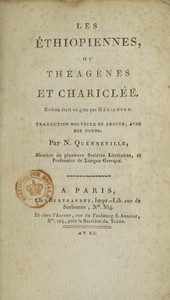
Les Éthiopiennes, ou Théagènes et Chariclée, tomes 1-3 by of Emesa Heliodorus
Heliodorus’s ancient epic starts with a scene that could be straight out of a movie. Two teenagers, Theagenes and Chariclea, are found on a beach in Egypt next to a wrecked ship and a lot of dead bodies. She’s clutching a bow, he’s unconscious, and a band of pirates is on the way. From there, the story spins out into a massive journey. They get separated, captured, and sold, all while trying to find their way back to each other. The plot is a chain of narrow escapes and dramatic twists that takes them from Delphi to the heart of Ethiopia. The big question driving it all? Chariclea’s true origin, which is tied to a dangerous secret that could change a kingdom.
Why You Should Read It
For a book from the 3rd or 4th century, this feels incredibly modern in its pacing. It’s not a dry myth; it’s a pulse-pounding adventure with a solid love story at its core. What I loved most was Chariclea. She’s not a passive damsel. She’s clever, brave, and often the one driving the action with her quick thinking. The book also plays with ideas of fate, identity, and seeing beyond someone’s race or social status in a way that still resonates. It’s a reminder that people in the ancient world loved a good, page-turning yarn just as much as we do.
Final Verdict
Perfect for anyone who loves historical fiction, grand adventures, or classic love stories and wants to see where those genres really began. If you enjoyed the sweeping scope of 'The Odyssey' or the romantic peril of later adventure novels, you’ll find the roots of it all here. It’s a big, satisfying read that proves some stories are truly timeless.
Legal analysis indicates this work is in the public domain. You do not need permission to reproduce this work.